
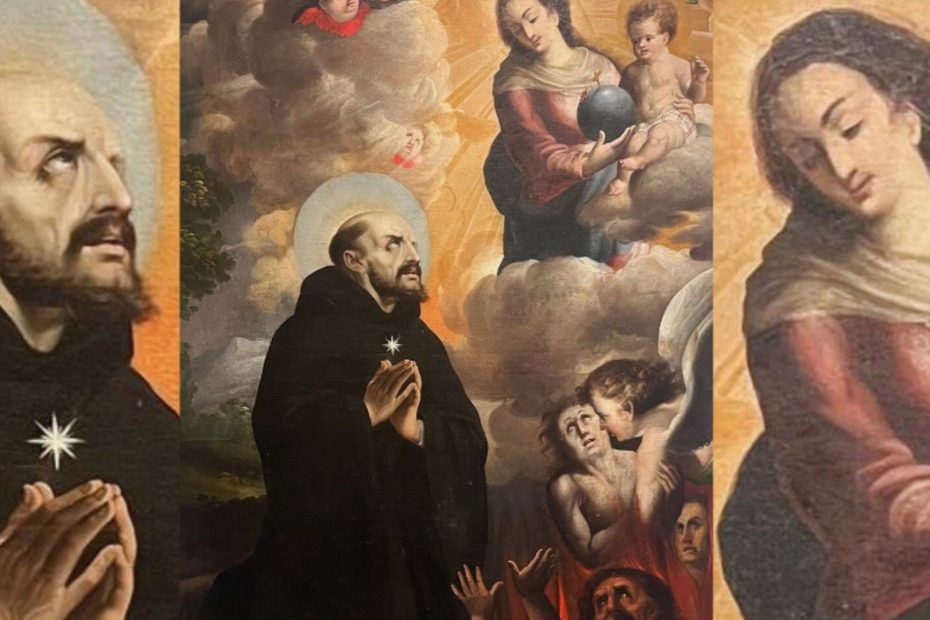
Our sins are so numerous and grave, and our acts of reparation so poor and scant, that it would be nearly impossible in this life to pay the temporal punishment due for our iniquities—if the Church, with the heart of a Mother, did not make up for our weakness by opening to us the inexhaustible treasure of indulgences.
The Catechism of the Catholic Church explains this clearly: “An indulgence is the remission before God of the temporal punishment due for sins already forgiven, which the faithful Christian who is duly disposed gains under certain conditions through the mediation of the Church, which, as the dispenser of the redemption, distributes and applies with authority the treasury of satisfactions of Christ and the saints” (CCC 1471).
In other words, an indulgence is the remission before God of the temporal punishment for sins already forgiven, obtained by the faithful under certain conditions.
To understand this doctrine and the Church’s practice, we must remember that sin has a double consequence. Mortal sin deprives us of communion with God and therefore makes us incapable of eternal life, the loss of which is called the eternal punishment of sin.
Furthermore, every sin—even venial—leaves a disordered attachment to created things that must be purified, either here on earth or after death, in the state called Purgatory. This purification frees the soul from what is called the temporal punishment of sin.
These two punishments should not be thought of as some kind of external vengeance inflicted by God, but as consequences that flow naturally from the sin itself.
A conversion that arises from fervent charity can lead to the total purification of the sinner, so that no punishment would remain (CCC 1472).
What an immense, inexhaustible treasure! Composed of the superabundant merits of Our Lord Jesus Christ, the Blessed Virgin Mary, and the Saints in Heaven, it has been entrusted, like the keys of the Kingdom, to the Holy Father, so that he may dispense it with wisdom and charity.
After the Holy Sacrifice of the Mass and Holy Communion, nothing is more admirable or more abundant—both for the living and the dead. It is, so to speak, the final effort of Divine Mercy for the salvation of souls.
Through indulgences—which are numerous, easy to obtain, and accessible to all—we have the means to satisfy Divine Justice and to rescue beloved souls suffering in the flames of Purgatory for the sins of their past lives.
We can consider this multitude of indulgences, which the Holy Church pours out with generous hands, as a benevolent rain refreshing the thirsty soul, comforting the sorrowful, and bringing light and joy to those who groan in captivity.
Let us then hasten to acquire these spiritual riches, more precious than gold, more abundant than ever, more fruitful in graces. Earn them often, earn them frequently. The souls we love, for whom we mourn, will be aided!
How are they obtained? To gain indulgences, three essential conditions must be met:
First, one must be in a state of grace. God wants us to close the gates of hell beneath our own feet before helping others. Moreover, any act performed in mortal sin is spiritually dead, without merit before the Most High.
Second, one must have the intention—at least in general—of gaining the indulgence. For this reason, it is recommended to renew each morning during prayer the desire to obtain all the indulgences attached to the pious acts we will perform throughout the day.
Third, one must fully carry out the prescribed works, which are usually very simple, brief, and within the reach of all the faithful: a short prayer, a small almsgiving, a mortification, a communion…
For charity’s sake, Christian souls, do not fail to provide the faithful departed with such easily attainable treasures.
Would it be excusable to remain indifferent, now more than ever, when so many indulgences are applicable to the souls in Purgatory, and so easily within reach?
It is in your hands to help your suffering brothers and sisters—and it costs so little to do so…
If you gain a partial indulgence for them, you shorten their time of expiation; if you are generous enough to offer a plenary indulgence, the soul to whom it is applied may be completely freed from all debt: Heaven opens for them, and they rise radiant, bringing to the Lord the eternal gratitude they owe their benefactor.
“My son,” said Saint Louis, King of France, at the end of his testament, “remember to gain the indulgences of the Church.”
You too can be the instrument of that remission.
Your prayer can be the bridge that leads a soul to eternal rest.
For this reason, we invite you to join the Virtual Oratory for the Souls in Purgatory:
Each day, join other faithful in offering prayers, Masses, and indulgences for those awaiting the eternal light.
Your voice becomes part of an invisible choir, lifting songs of hope at the gates of Heaven.
Sources: A Month with Our Friends: The Souls in Purgatory — Knowing Them, Praying for Them, Liberating Them, Father Martin Berlioux; Catechism of the Catholic Church, nos. 1471–1472.
Photo: Saint Nicholas of Tolentino intercedes for the souls in Purgatory. Melchor Pérez de Holghín (1660–1732). © Felipe Barandiarán Porta.
